
The Secret is Out – We Are Back and Growing!
It’s been a little quiet lately at Dine With The Locals. Although we never truly went away and have continued working with our wonderful hosts across Cambodia, our website didn’t always reflect that. But that is all about to change!
A Fresh New Look
Over the past few weeks, we have been working hard behind the scenes to give our platform a complete makeover. We are refreshing our website and will soon be active on social media again to promote the incredible experiences our hosts offer.
The Heart of Our Concept
While we are growing, our core mission remains the same: bringing travelers into direct contact with local families—particularly women—to help generate vital extra income for their households. We often work with families who would otherwise never have the chance to meet international tourists.
For travelers, this is a unique opportunity for genuine connection. Some of our hosts speak little to no English, but we believe that is all part of the authentic experience. Often, it is the children—who are learning English in school—who step in to help translate, creating a beautiful bridge between cultures.
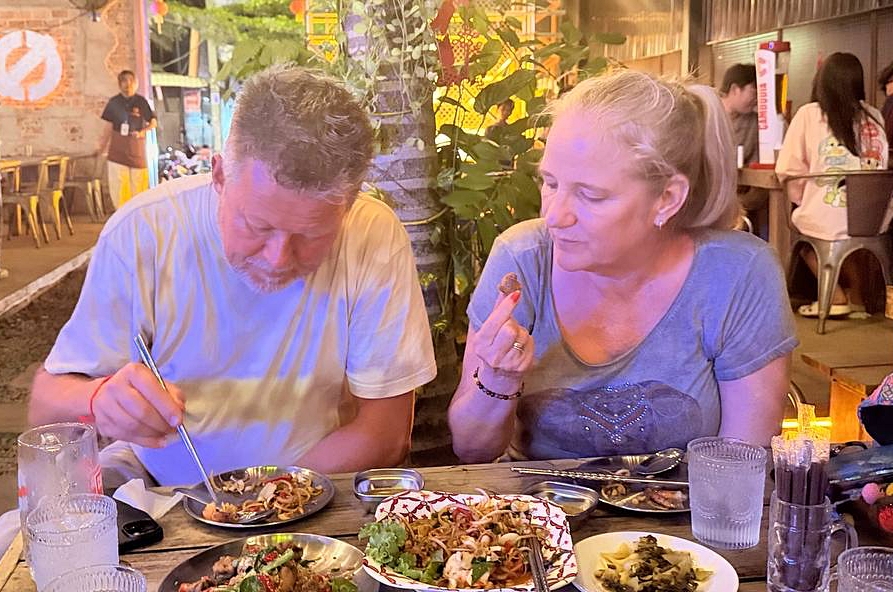
Local food hunter dine with the locals
More Than Just a Meal
Dine With The Locals is evolving. We are now going a step further by connecting travelers with Cambodia’s talented artisans. From painters and sculptors to traditional knife makers, potters, and jewelers, we want to showcase the incredible skills of these master craftsmen. By featuring their workshops, we help them share their heritage and support their livelihoods.
Beyond the Highlights: Expect the Unexpected
We believe there is so much more to Cambodia than just “ticking off” the famous temples. Today’s travelers want to be active, engaged, and connected. We invite you to arrive with an open mind and expect the unexpected. It is often the unplanned moments and spontaneous smiles that turn a simple meeting into a lifelong memory.
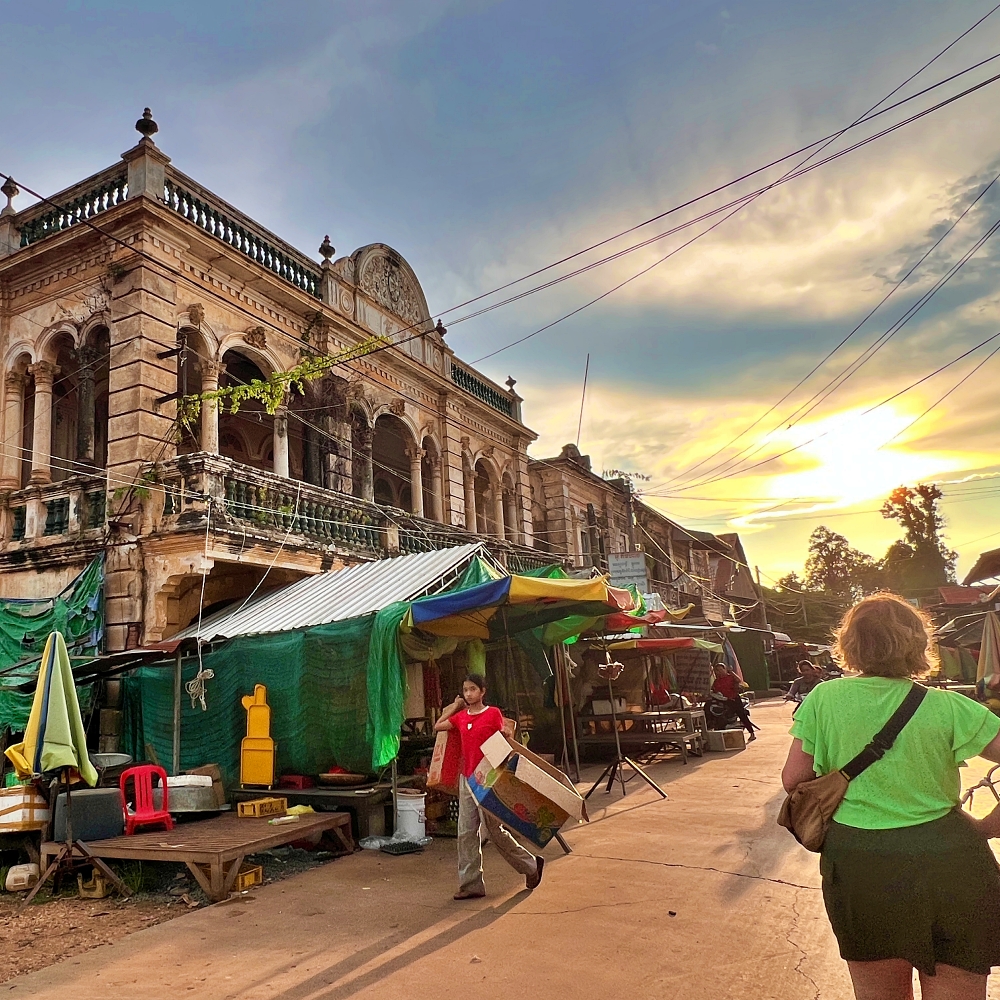
New Destinations & Your Help
Currently, we are active in Siem Reap, Phnom Penh, Battambang, and Chhloung, and we are expanding rapidly.
This is where you come in! Do you know a family that loves to cook? An artisan practicing a traditional craft? Or someone who can take travelers into the rice fields to help local farmers? Whether it’s a unique skill or a creative idea for a local encounter, we want to hear from you.
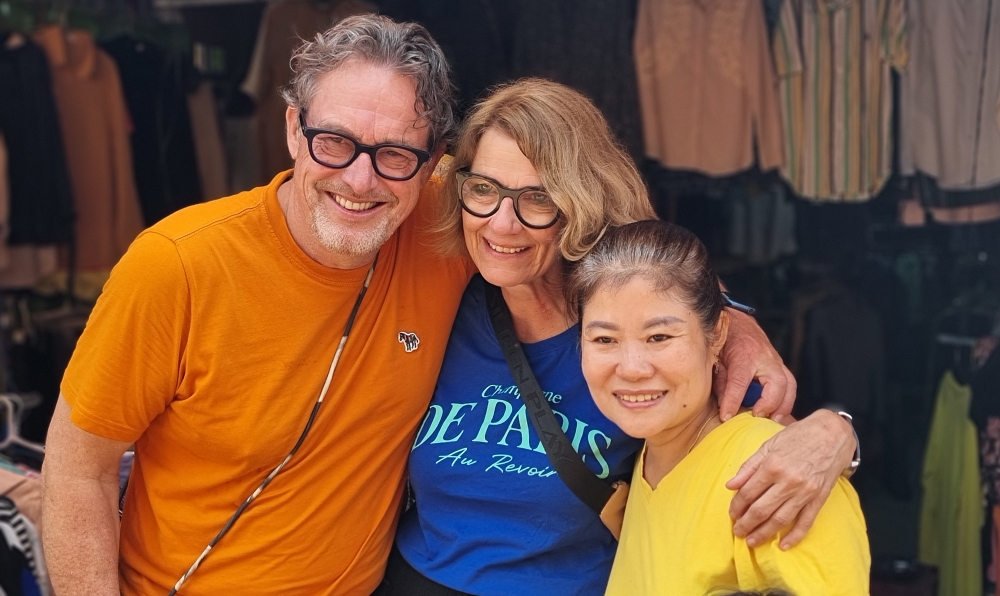
Stay Tuned
Keep a close eye on our website over the coming months as we continue to add unique, one-of-a-kind experiences. Let’s make travel personal again.

Handing over a great project
Dear all,
there is rarely a good time to say Goodbye. For me, the best time is when things are doing well. Dine With The Locals was founded by me, Sorida and Phy four years ago to support local families and women as well to promote Khmer food. We started very well, until Covid-19 hit. Phy and me decided to downgrade it a bit afterwards, and I kept the project alive with blog posts. After the worst was over, we tried to rebound – successfully. We are getting more bookings now.
When Covid-19 came, I had to look for another income and started a web service company. This venture is doing so well, that I don’t have the time needed to run Dine With The Locals in a way it deserves. But I wanted to keep it alive, and after some searching I found André, Lily, Dean and Ada. They are experts in tourism and food and enthusiastic to take over the project. They will make it an even greater success, I am sure.
The host families are an important part of my admiration for Cambodia. I learned so much from them, not just cooking and about Khmer food. Dine With The Locals and its families became an integral part of my life, and I will miss it for sure. But I will stay in Cambodia, just in a different venture.
I want to thank our guests, business partners, hotels, guesthouses, travel agents, guides and drivers and all others who supported us. My Co-Founder Phy and my assistant Mealea supported me in a way I never imagined, and I will be forever grateful for the help.

I wish André, Lily , Dean and Ada all the best and good luck, I think Dine With The Locals is in the best hands now and can grow even more. Thanks again.
Thanks again for everything.
Thomas Wanhoff, Co-Founder

The best hidden food secrets of Cambodia in 2022
Angkor Wat and its surrounding temples have been the center of an vast empire for hundreds of years. We do know who ruled the Khmer Kingdom, but we know little about the daily life of average people. For example the food secrets of Cambodia. The only clues we can get are from the carvings at the temples. And there, we learn about the history of Cambodian food and the way it was prepared.
When visiting the Angkor Wat archeological park you will see food and farming on each wall of the temples are different designs, carvings and descriptions. In this article we will show you some carvings that are a part of the Bayon temple and describe the lives of people in the past.

Based on those carvings, we know that in the past Khmer people were occupied with hunting and fishing for a living. They also sold or exchanged goods for each other. But the carvings reveal some of the food secrets of Cambodia.
Bayon temple shows food secrets of Cambodia in carvings
Even in ancient times Cambodians used a cooking place that resembles the outdoor kitchens of today. A carving at the Bayon temple shows a group of people in the kitchen. Some are cooking rice (not really a food secrets of Cambodia), some are preparing ingredients for cooking and some are light up the fire. This carving not only shows us about people who are cooking but also shows us about what kind of materials people used. All of the tools such as stoves, pots and pans in ancient Khmer kitchens may have been made of clay or brass, depending on the era.
In addition to carvings showing us cooking, we also have a carving that shows about eating . Now Let’s take a look at the next carving below. One of the less know food secrets of Cambodia is, that at the time of Jayavarman II. most Khmer dishes were developed. But one ingredient wasn’t available yet: chili. It came later from South-America, and that is one reason why Thai food developed later – is spicy, but Khmer food usually isn’t. We haven’t found any signs of chili plants in the carvings.

This carving shows the activities of people eating. It looks like a group of people, eating together at a party or family meal in different places. still today Cambodians often sit together in a circle on a bed or mat and use their hands for eating. But If we take a look at the carving on the right of the top in this part , we can see that a person is sitting on the short chair while other people are kneeling on the ground. So it might be that the higher ranking people sit seperated from the normal people.
This and what we know about the luxurious lifestyle of royals as well from trading with India and China suggests, that Khmer food had a lot of varieties. we don’t know if the fish paste prahok was developed yet, but it is likely. The kings cooks had everything regarding spices and meats at their disposal, and the surely used it.
These are just some of the carvings mentioned above. There are many other carvings that show stories about the living of the people. When you visit the Bayon Temple, take the time to explore those carvings. There are so many stories told.
If you want to learn more about the secrets of Cambodian food and the daily life of Khmer, Dine with the locals will give you experiences of cooking , eating and more activities with locals.

Cambodian krama – a great fabric since 2000 years
I if you ever been to Cambodia you must probably have seen people wearing a krama scarf with a very simple or sometimes very complicated pattern. On the countryside people are wearing it around the neck or even on the head. When you go to a wedding or any other official occasion, you will see people wearing a scarf around their waist or hanging from one shoulder across the breast. The name appears in English in different writing, often also called a kroma. We will use both words here.

What is a Cambodian krama?
Do you know what a krama is? It’s the Cambodian name for a traditional scarf that people have known very well and used in daily life for a long time. It is a piece of fabric made from cotton or silk. According to research, they found a weaver shuttle and thread that aged 200 year before AD in Cambodia’s northern Preah Vihear province. So it is shown that a kroma have been made for at least 2200 years.

How is a krama made?
Making a Cambodian krama can be done in two different ways. One is the traditional way and the other one is the modern way. Making a krama both from cotton and silk is more complicated in the traditional way compared to the modern way. All materials such as thread, board(ក្តាររមូរ),wood teeth(ធ្មេញឈើ) ,weaver shuttle and loom, were made by hand. Our host Ms Naysim in Phnom Penh makes Khmer kroma and other scarfs in the old traditional way. She is one of the few producers of Cambodia Golden silk left in the country. Visit her for cooking together and the weaving silk.
They have to follow step by step: From the collection of cotton or silk, drying the cotton and taking the seeds out, beaing, rolling and spinning to dyeing and steaming. You can watch how it is done at our host Naysim in Phnom Penh, she owns a slick farm ant fabric production.
The process of making a Khmer krama

Then the yarn is divided and prepared on wood teeth. In this step, Krama makers need a lot of people to help and also it takes 3 or 4 days. The last step is to weave into a Krama. They produce colors for kroma by using natural ingredients like trees, leaves and seeds. This is different from the modern way of weaving and production, where nearly all materials are imported from abroad.
How do people use a Krama?
In daily life, people like to use a Cambodian kroma that is made from cotton more than silk. Kromas made from cotton can be washed many times and are easy to keep, unlike those made from silk – we can not wash it often, or it will be destroyed. Cambodians use silk kromas mostly as a gift, a decoration or sometimes in ceremonies. The Krama was used in daily life in many different ways. People used it as clothes, a hat, a rug, table cloths,a hammock for little kids and it is also used for khmer folk games, more and more. You want to learn how to use it? Visit our host Ms. Chan Mony in Siem Reap and enjoy a delicious meal and afterwards a quick tour through how to wear a krama.
As we describe above, a krama is not only a piece of fabric, but it also shows the value, content, identity, culture, patience, hard work and many benefits in daily use.
Author: Mealea Kong

The best Cambodian sweet and sour soup in 2022
Since I was young, I liked the taste of sour food, from pickles to fruits and dishes. When I felt not well, I’d like to eat sour dishes – they made me somehow feel stronger and awake. The Cambodian sweet and sour soup (in Khmer called Samlor machu trey) is special, since it also contains chili. Once they kicked it, I sometimes started sweating – kind of natural body cleansing. Mostly I cooked this soup on Sundays when I was a student, when our family wanted to give my mother a break from daily house duties. Still, she handed me a list with ingredients I bought at the local market.

Soup was the first I ever cooked, I still remember– an easy one with potatoes and mushroom and carrots.
Cambodian sweet and sour soup is one of the popular dishes for Khmer
Cambodian cuisine is more diverse than some may think. If we talk about Khmer food and what people cook for daily life, we will think of one kind of Khmer soups (called Samlor). The Cambodian sweet and sour soup is one of the popular dishes, easy and fast to prepare and healthy.
People use different kinds of vegetables and fish to make it, like rice fields craps or small shrimps, to make sweet and sour soup in many types. For the simple one we can use green papaya pieces, water lily, morning glory, the core of the banana stem and winter melon. If you cook sweet and sour soup in Cambodia with kreung ( the traditional Khmer spice paste) and coconut milk, and you want to add vegetable, morning glory is a popular one to add, usually without shrimps.

We call it then samlor machu kreoung. The important ingredient that we should not miss is prahok, the infamous Khmer fermented fish paste, and sour fruit. Sour fruit could be tamarind, lime or lucidas fruit.

One of the secrets why Cambodian sweet and sour soup is so popular lies in the ingredients. They are easy to find, often just around the house. The soup is an every day dish, found regularly on many lunch tables in Khmer houses. Enjoy our virtual cooking class here!
How to make sweet and sour soup (classic style)
Ingredients for classic Cambodian sweet and sour soup
- Fish
- Morning glory
- Garlic
- Galangal
- Prahok or fish sauce
- Salt
- Sugar
- Seasoning
- Tamarind / lemon/krosang fruit
- Rice paddy herb or holy basil
- Chili
How to cook it
-

Clean the fish 
Clean the morning glory
Clean the fish using first water and then salt and clean morning glory, then cut into pieces. (If you are vegetarian, use fried tofu cubes instead) - Peel of garlic, slice galangal, put tamarind into a bowl, smash it an add a bit of hot water to make sour sauce.
- Put prahok in a bowl of hot water and pour into the pot while the water is boiling. If prahok is to intense, use fish sauce. For a vegetarian option use mushroom sauce. Then add tamarind sauce, garlic and galangal.
- After the water boiled for about 10 minutes, add fish cubes (as well as crap and small shrimps, if you want to add).
- Once the fish is cooked and soft add the vegetables, salt, sugar, seasoning and a bit of fish sauce.
- Lastly, put rice paddy herb or holy basil, chilly and its done.
Sweet and sour soup in Cambodia with kreung spice paste
There is no right or wrong with using kreung paste for the soup, it just gives a more intense taste.
Ingredients:
Ingredients (for 4-6 people)
- fish 1kilogram
- lemongrass 4 pieces
- Dried chilly 3 pieces
- Turmeric 1 small piece (2 cm)
- Galangal 1 small piece (1.5 cm)
- Kaffir lime 3 leaves
- Lucidas fruit 3-4 depend on size (can be replaced with lemon)
- 3 long peppers
- Prahok 30g
- Fish sauce 1 tablespoon
- •Garlic 1 glove
- Seasoning 1teaspoon
- Salt 1/2 tablespoon
- Sugar palm 1/2 tablespoon
Steps to make it:
- Clean fish with salt and cut to pieces.
- Slice lemon grass, garlic, turmeric galangal add a bit of salt and punch until smooth.
- Squeeze a lucida fruit into a bowl, add minced prohok, slice pepper into small pieces.
- Mince and soak dried chilli .
- Mix fish, kreoung, prahok, squeezed lucidas fruit or lemon, palm sugar, fish sauce and seasoning into a pot add a bit of water stir gently.
- Start heating on medium heat, keep boiling for 5 mins then add 1/4 cup of water
- Simmer until fish is cooked.
- Add kraffir lime leaves to taste
- Lastly add slices of peppers.
In Cambodia, a soup is usually served with rice. Some families will also add some herbs and fresh vegetables, whatever is handy. If you are invited or visit one of our hosts, you would pour the soup in a bowl, then get a small plate with rice. You can pour soup over the rice or just eat both separately.
Author: Mealea Kong

How to make the best Khmer Curry (Samlor curry)
When we talk about food in Asia, Khmer curry (Samlor curry) as well as Thai and Indian curry is one of the first dishes that comes into our minds. The Khmer empire ruled once over large parts of what is today south-east Asia. As you can still see at the ancient site of Angkor Wat (which was built as a Hindu temple first), the culture was influenced by the Hindu religion and Indian food. One dish that remembers one of the culinary roots is Khmer curry. It combines spices brought from priests and business people to the kingdom with local ingredients.

Cambodian food – as you will see in our cooking classes at Dine With The Locals – has two major ingredients special to the country: Kreung, a spice paste, and prahok, fermented fish. But are part of a long tradition of food in Cambodia. Prahok was used not only to give the food a certain taste. It was a way to store protein – from fish – in areas where there was drought or not much access to rivers and lakes. The Khmer curry combines all of them into a mild dish, found nearly everywhere in the country.
Khmer curry is not spicy
Other than Thai curries, the Khmer curry is not spicy at all. The reason: When Khmer food was developed during the Jayavarman period, chili was not yet known in the region. It came later from South-America. Cambodian food is usually more sweet, because palm sugar is a main ingredient. Other spices used are lemon grass, galangal, ginger and other roots.

Ingredients for an authentic Khmer curry
- 1/2 Chicken
- 2 big cubes of blood curd
- 1.5 cup coconut milk
- Kreuong paste (make it yourself or buy a at the market)
- Fresh chilli, soaked in water
- 1 Onion
- 1 Sweet potato
- 3 tbs red curry powder
- 1 tspPrahok
- 1 tbp Palm sugar
- Fish sauce to taste
- 1 cup water
- Oil
Vegetarian Khmer curry
- 6 small cubes tofu
- 1.5 cup coconut milk
- Kreuong paste (make it yourself or buy at the market)
- Fresh chilli, soaked in water
- 1 Onion
- 1 Sweet potato
- 3 tbs red curry powder
- 1 tbp Palm sugar
- Mushroom saucee
- Oil
How to make a delicious Khmer curry
As with the more yellow Indian curry powder the red Khmer curry powder is rarely made fresh anymore. Most people buy it at the market. The main ingredients are Chili Powder, Turmeric, Black Pepper, Star Anise, Fennel Seed, Fenugreek Seed, Coriander and Cumin, although some may change the list a bit. Most important is that only a bit of chili is used – it should not be too spicy.
- Clean the chicken and blood curd (slice the chicken if you want)
- Cut the sweet potato in slices, as well as the onion
- Heat the oil
- Add chilli paste first, then prahok
- Add kreung paste
- Stir until fragant
- Stir in palm sugar, let it melt
- Add seasoning and fish sauce
- now add either chicken and bloog curd or tofu.
- Stir and add water
- Heat up until the water starts boiling
- Simmer for 5 minutes
- Add cocount milk
- Heat it up then add onion and sweet potato
- Let it simmer until potato is soft
- Serve with rice, rice noodles or bread

How to cook fish amok at home
One of the most famous dishes in Cambodia is fish amok. It’s a kind of curry, but with a very local twist when it comes to spices used in it. Many restaurants offer it, at Cambodian homes it is mostly cooked vor special occasions. If you want to know how to cook fish amok at home, just follow our guide. We got the advise from our host Ms. Laum, who cooks on of the best fish amok in Siem Reap.

What do you need for fish amok?
The dish is made from fish, species and coconut milk. It dates back to the times of the Khmer empire, and recipes have changed over time. For fish you can use freshwater fish, from tilapia to any carps or catfish. Best get a fillet at the market. The secret ingredient of fish amok is the Cambodian fish paste know as kreung. It contains lemongrass, galangal, tumeric, kaffir lime and garlic. Depending on your taste you can add any amount of chili to it.
In Cambodia people will nut fresh coconut milk at the market, but a canned one will do it as well. Also, the original recipe requires no i tree leaves. They can be replaced with kaffir lime leaves.

Steaming or cooking?
There are two main ways of cooking fish amok. Or host Ms. Laum told people when asked how to cook fish amok at home that you can use a steamer or a pot. She herself steamed it for a while but now changed to just simmer it. The taste is basically the same, steamed fish amok is sometimes a bit more solid, in particular when egg was added.
Ingredients:
- 100g noni leaves or kaffier lime leaves
- – 1 kg Cat/River fish
- – 1 Teaspoon fish paste
- – 2 Teaspoon salt
- – 200g Kroeung paste
- – 1Teaspoon palm/white sugar
- – 300ml coconut milk.
If you want to make kreung by yourself, just combine finely sliceed lemongrass, ginger finger root, turmeric, kaffir lime slices (small and thin pieces) add some peeled garlic. Put them in a blender or mortar and blend until its a fine paste. You can also buy kreung at the market.
How to cook fish amok at home in 45 minutes
Preparation:
1. Salt the fish and cut into cubes
2. Slice noni or kaffir lime leaves in fine stripes
3. Mix kreung paste with sliced chilli.
4. Add fish paste (fermented fish, in Cambodia known as prahok) and mix together.
5. add coconut milk and mix well.
6. The add the dish and mix again.
7. Transfer it to a pot. You may want to add brown or palm sugar and fish sauce.
8. Heat up with the lit closed unti it boils. Reduce the heat and let it simmer for 30 minutes. If you have noni tree leaves, you can put some pieces on top.
9. Serve with rice.
Even Cambodians learn again how to make fish amok at home

Since most ingredients, in particular kreung paste is nowadays available already mixed at markets, fish amok gets slowly back to the dining tables of Cambodians. Modern middle class families don’t have the time to squeeze coconut flesh in order to get the milk out of it. They just buy as much ingredients as they can an the market or supermarket. Some don’t even know how to make fish amok with a steamerwith a steamer at home any more – so they found a simpler way to cook it for the family.
If you want to make it while in Siem Reap, book this experience with Ms. Laum here. She will take you to all the steps and you have to work a bit before getting a yummy dinner in a local home in Cambodia.

How to eat durian in Cambodia
Durian, also know as stinky fruit or The King of fruits, is an eatable fruit of a certain species of tree in Asia. It’s famous for the strong odor, but also for it delicious creamy texture. In Cambodia you can buy durian at most local markets as well as from street vendors. Durian is usually farmed in Kampot, Kampng Cham and around Battambang. Many fruits are imported from Thailand and Vietnam as well.
Durian is different from jackfruit. The latter is a much bigger fruit with smaller spikes and a different, more sweeter taste. The prices depend on the season and quality. You can get them starting from 13.000 riel per kg (about $3.50) all the way up to 20.000 riel ($5). Most stalls have a fix price, although there is a small margin for bargaining.

Where to buy durian in Siem Reap?
Most people will direct you to the roundabout on Apsara road near the Sokha hotel. Many vendors have their cars lined up on the street. Most markets have stalls as well – just follow the smell. And that’s why supermarkets rarely sell it.
Can I take durian back to my hotel?
The simple answer is no. Hotels will not allow even locals to bring durian inside the premise or rooms. It’s also banned in buses and planes.
Where to eat it?
It is common to eat durian in the tuktuk on the way to Angkor Wat or other places to visit in Siem Reap. Cambodians know how to picknick, so they will just stop somewhere, sit in the shadow of a tree and enjoy durian and other fruits and food they bought on the way.
How to eat durian?
When you buy it on the street, ask the seller to open the fruit and take the eatable pieces out. They usually give you a box for it. Some sell the inner parts of the flesh (normally for a higher price). In the markets you may see them selling durian with sticky rice and coconut milk. There is also ice cream made from durian and dried durian chips.
When eating you may use plastic gloves of a fork. Once you have contact with your skin, the smell may stay for a while, even after washing your hands. Also be aware of the seed inside – it cannot be eaten raw. But you can bake them until soft.
The outside skin (the one with the spikes) can be used as traditional local medicine. They say it helps for the pain during a women’s period. The skin is dried and then boiled with water.

Enjoy Cambodian food and Khmer hospitality
Slowly Cambodia is getting tourists again, we say an increase in requests compared to last your and got actual bookings.Dine With The Locals is operating again, but we had to make a few adjustments. Due to the challenges of the last two years and costs we had, as well as increased tax and food costs we have to adjust the pricing a bit. We also had to update the lists of hosts – some are not available anymore, but we are looking for others. We still connect you to families with delicious Cambodian food.
This is how you can get a taste of Cambodian food
When you visit Cambodia you most likely get fish amok presented, a national treasure and signature dish, There are many ways to prepare it, but Ms. LaumMs. Laum, one of our hosts, is doing it in a very special and delicious way. She will explain all the secrets and you can even make Num Pom, Khmer waffles, with her.
Our host Ms Vannarith is one of the most popular families for our guests. She lives with her husband and two children in the Angkor forest, in a traditional wooden house. If you ever wonders, how Khmer families live these days, Ms, Vannarith and her husband give you a very good insight – and you get some super yummy handmade fishballs.


Cambodian food is part of the Khmer culture, and so is silk. When you are in Phnom Penh, we strongly recommend you to visit Narim, who owns a silk farm and makes traditional and modern products out of it. She is part of a community promoting the old Golden Cambodian Silk and patterns centuries old. Beside learning how to weave, you will prepare together a three course meal.
We are looking out now for more hosts where you can get a unforgettable experience with a local family. Other than cooking classes this is a authentic adventure you will never forget. Many guests made friends here, and are still in contact with the families. Enjoy Khmer hospitality and the varieties of Cambodian food.

Siem Reap ist eine große Baustelle
Die Covid-19-Pandemie hat Siem Reap zu einer Geisterstadt gemacht. In der Pub Street sind fast alle Bars und Restaurants geschlossen, die Straße zum Flughafen ist gesäumt von Hotel mit einem Schild “Zum Verkauf” oder “Zur Miete” an den zugezogenen Gittern an den Eingangstoren. Die Zahl der ausländischen Touristen ist um über 90 Prozent gesunken. Kleine Läden, die in Angkor Wat einst kühle Kokosnüsse und gebratene Bananen verkauften, bieten jetzt Gesichtsmasken an.
Gleichzeit hat ein gigantisches Bauprojekt begonnen. Die Zentralregierung in Phnom Penh hatte 2020 beschlossen, 38 Straßen in Siem Reap zu erneuern. Dafür wurden 150 Millionen Dollar budgetiert – das meiste Geld stammt aus Verkäufen von staatlichem Land.
Seit einigen Monaten nun haben Bagger die Touristenbusse abgelöst, Bauarbeiter mit Helmen und Warnwesten stehen dort, wo einst chinesischen Besuchergruppen ihrem Führer hinterherliefen. Die Sivutha Road im Herzen von Siem Reap wird ebenfalls erneuert wie die Airport Road. In der Pub Street werden neue Abwasserrohre verlegt. Wo einst Angelina Jolie einen Cocktail trank, sind heute die Rolläden heruntergelassen. Das Red Piano hat eine zweite Dependance in der Sok San Road eröffnet, die bereits fertiggestellt ist.
Hier und da kam es zu Protesten, weil einige Häuser in die Straße hineingebaut wurden oder Stände einige Meter öffentlichen Raum in Anspruch nahmen. Da halfen aber die sonst so guten Beziehungen nicht, manches Hotel musste seine Einfahrt zurückbauen oder verlor gar seine Rezeption.

Die neuen Straßen werden nicht nur einen neuen Belag bekommen. Zu dem Projekt gehört es, dass die meisten Kabel in die Erde verlegt werden. Gleichzeitig werden die Straßen auf die ursprüngliche Breite vergrößert, viele bekommen sogar einen Bürgersteig.
Derzeit, um Juni 2021, sind die meisten Wasser- und Abwasserrohre verlegt, die Gräben und Löcher wieder zugeschüttet. Am Jajavarman-Hospital sind die ersten Abschnitte schon fertig. Die Airport Road bekommt in einigen Abschnitten bereits ihren Asphalt.
Wenn in 2022 Touristen wieder nach Siem Reap kommen, werden sie sicherlich ein anderes Bild sehen als noch zuvor. Die City Hall malte in einem Video das Bild von prachtvollen Boulevards und Booten auf dem Siem Reap River. Auch wenn da einige bezweifeln, auf jeden Fall wird Siem Reap anders aussehen.
Noch sind aber Touristen in weiter Ferne. Die Zahlen mit Neuinfektionen sind landesweite im mittleren dreistelligen Bereich, in Siem Reap zwischen 20 und 30 täglich. Es gibt ein Verbot von Alkoholverkauf, außerdem ein Verbot von Versammlungen und eine Ausgangssperre zwischen 22 und 4 Uhr. Derzeit wird in der Haupstadt Phnom Penh und den am schlimmsten betroffenen Provinzen geimpft. Die Quote liegt bei 20 Prozent, die meisten Impfstoffe kommen aus China, SinoPham und SinoVac.
Kambodschas Premierminister Hun Sen hat angekündigt, bis 2022 alle Bürger geimpft zu haben.

5 best local coffeeshops in Siem Reap 2020
You don’t have to walk around in Siem Reap for long to discover a small coffee stand on a street corner. Locals in Cambodia have discovered their love for coffee and many have opened their own coffee shops. Due to the Covid pandemic many cafes and restaurants have had to close, but a new one has opened. We have looked at the 5 best local coffeeshops in Siem Reap in 2020. They all belong to Cambodians as well.
Romsai Cafe
A little below the Sarai Hotel at the junction of Salakamreuk and Sombai Road is the Romsai Cafe. It is truly an oasis, as the owner has made a point of ensuring that the ambience here is dominated by many plants. You can get different kinds of coffee, but also local food. The coffee is roasted in Cambodia, the beans are from Asian farmers. Try the coconut coffee!


Order suggestions:
- Coconut Coffee
- Cafe Latte
- Noodle soup with beef
Opening hours:
Daily from 7am to 6pm
Price: $
Noir Cafe is one of the 5 best local coffeeshops in Siem Reap 2020
Noir started with a small corner in a minimart of a hostel. Meanwhile there are three branches in Siem Reap and three in Phnom Penh. The charm lies in the decoration, all coffee shops have something of industrial design, the owner Sotheara Tit has put a lot of effort into the interior design. There is also food here and one speciality is egg noodles and wontons, which are made according to Sotheara’s grandmother’s recipe.

Order suggestions:
- Milk with egg
- Cafe Latte
- Noodle soup with wonton
Locations:
Diagonally opposite the Park Hyatt
Road 6/Tela petrol station Royal Garden
Road 6/Lokthaneuy Road
Opening hours:
Daily from 7am to 6pm
Price:
$
Biolab: One of the best coffeeshops in Siem Reap to work

The small café was founded in 2018 and has slowly but surely developed into a meeting place for digital nomads and one of the 5 best local coffeeshops in Siem Reap 2020. The owner Samnang dared something by setting up the cafe a bit like a laboratory. You still get some drinks served here in a glass flask. On the two floors you can work in peace on your laptop, you can also rent a meeting room and even a small office. Meanwhile the coffee is roasted by yourself. Biolab also has a branch at Sa Srang in the Angkor Wat complex.
Order suggestions:
- Passionfruit soda
- Espresso
Location
Wat Bo road/street 22
Opening hours: Daily 7am -9pm
Price: $$
Temple Coffee n Bakery: Most comfortable of the best coffeeshops in Siem Reap 2020

After Lee Kong Srin and Lee Kong Vong, the founders of the legendary club in the pub street in Siem Reap, became more and more successful, they started a new project right at the river. The Temple Bakery has three floors, from here you can enjoy the sunset from the roof. On the ground floor and the first floor there are super comfortable lounges where you can relax.
Order suggestions:
- Prahok Ktis
- Coffee latte
- Cocktails
Price: $
Opening hours:
7am-11pm
Location:
Street 25 at the river
Madame Cafe
Actually, it’s just a little shack with a coffee machine in it. But the Madama Cafe on the river has become so popular with locals that sometimes there can even be traffic problems. You are sitting here directly at the Siem Reap River, among flowers and trees. The coffee is cheap, and you can also buy smoothies and even baked goods.
Order suggestion
- Iced coffee
Cinnamon Rolls
Opening hours:
7am-9pm
Price: $
Location: Riverside street, corner street 27
Brown Coffee

When the Chang Bunleang and the other young founders of Brown Coffee opened their first shop in Phnom Penh in 2009, nobody believed that they would one day become the largest chain in Cambodia. The entrepreneurs started with 10 employees, today 700 people work in 21 stores. In Siem Reap there is a cafe next to the Treeline Hotel on the river and a larger one at the end of Tapul Road. At Brown, the coffee is roasted by themselves and there is also very tasty food. It is for sure one of the 5 best local coffeeshops in Siem Reap 2020.
Order suggestion
- Coffee latte
- Chocolate frappe
- English Breakfast sandwich
Price: $$
Opening hours: 6.30am -10pm
Location: Treeline Hotel and Tapul road/Road6